
Post-Surgery Physiotherapy & Orthopaedic Rehabilitation
We review your surgical notes and align your treatment with your surgeon's protocol before your first session.
Same-day appointments available.
No referral needed.
- We coordinate directly with your orthopaedic surgeon
- Bring your discharge summary - we review it before session one
- No referral letter needed — book directly
- Same-day appointments post-discharge
Appointment
Post-Surgical Physiotherapy We Provide
We rehabilitate patients following all major orthopaedic and musculoskeletal surgeries. Find your surgery type below.
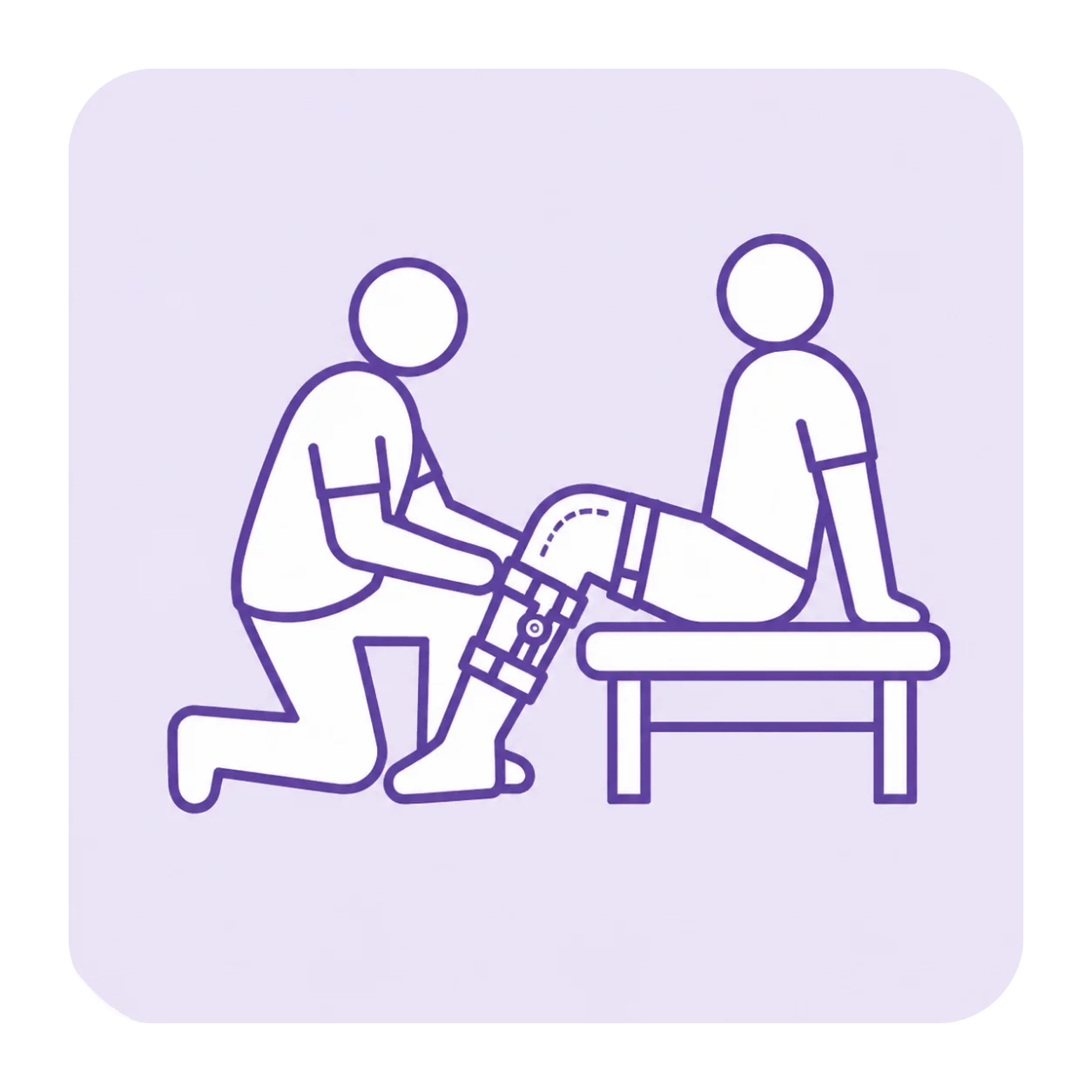
Physiotherapy After Knee Replacement
Total and partial knee replacement rehabilitation. Phase-based recovery: early mobility, swelling management, progressive strengthening and full function restoration. We work directly alongside your surgeon's protocol.
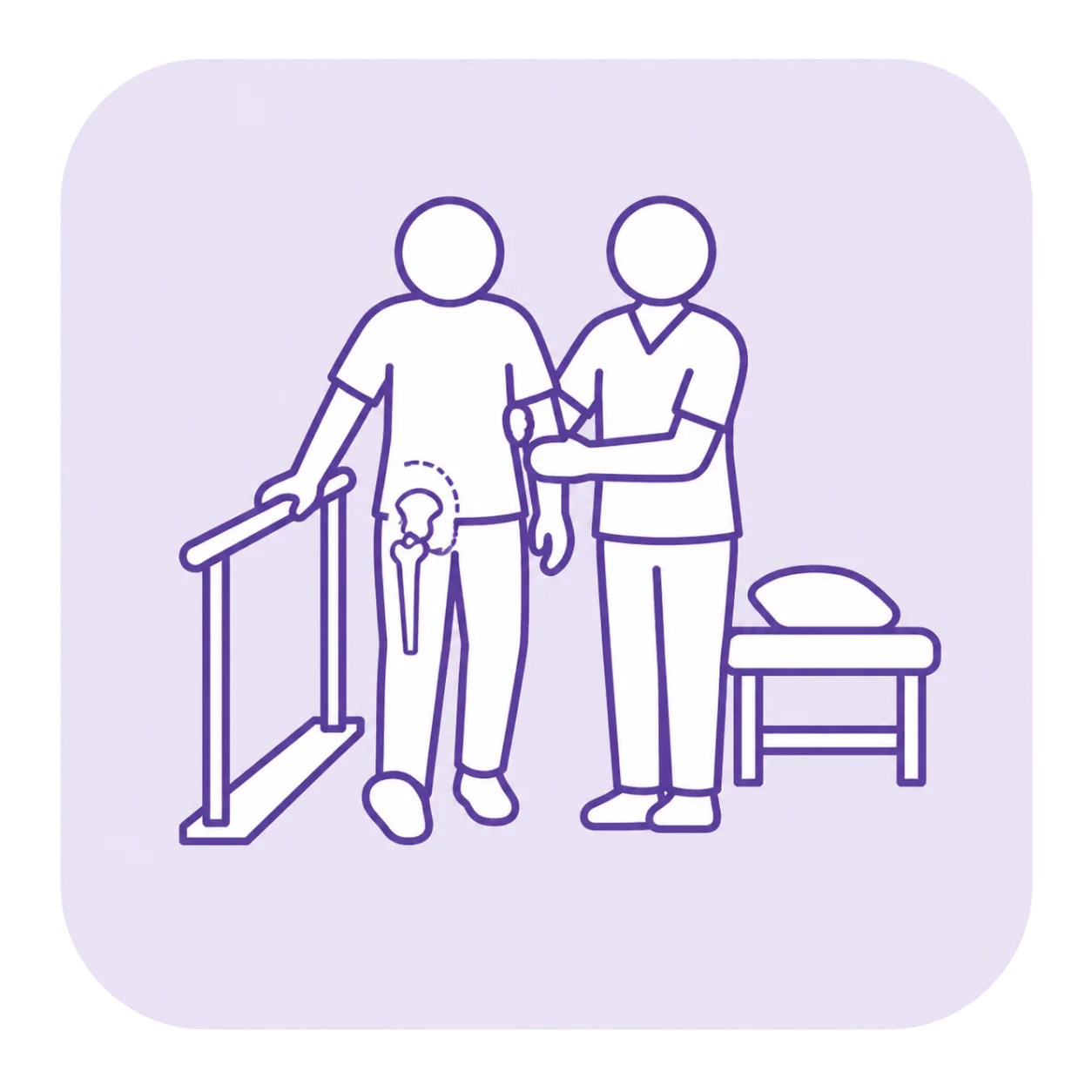
ACL Surgery Rehabilitation
Post-ACL reconstruction physiotherapy - one of OptraCare's deepest clinical specialities. Full 6–9 month phase-based programme from immediate post-surgery to return-to-sport clearance.
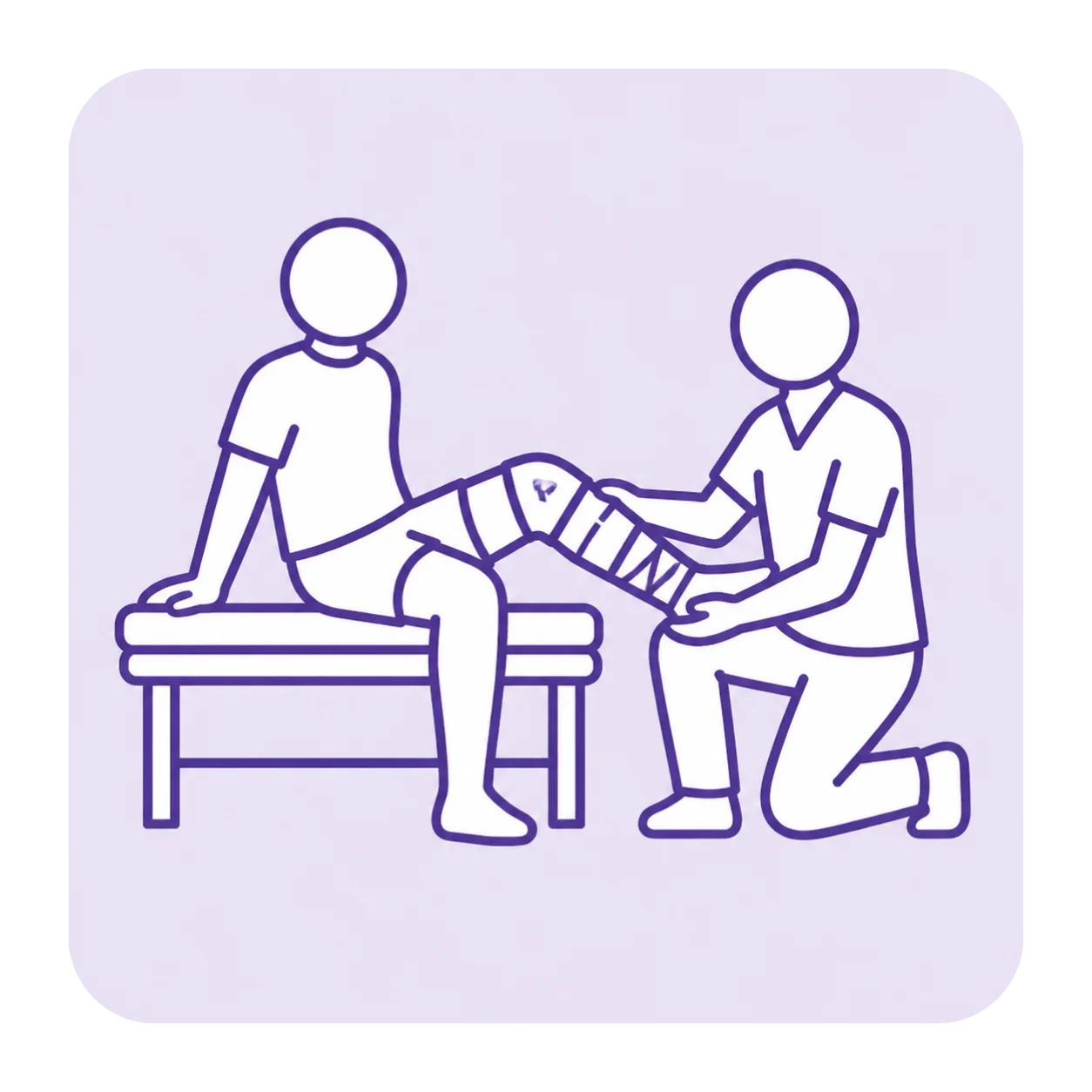
Physiotherapy After Hip Surgery
Total hip replacement, hip resurfacing, hip fracture repair and arthroscopy rehabilitation. Gait retraining, hip strengthening, stair mobility and safe return to daily activities.
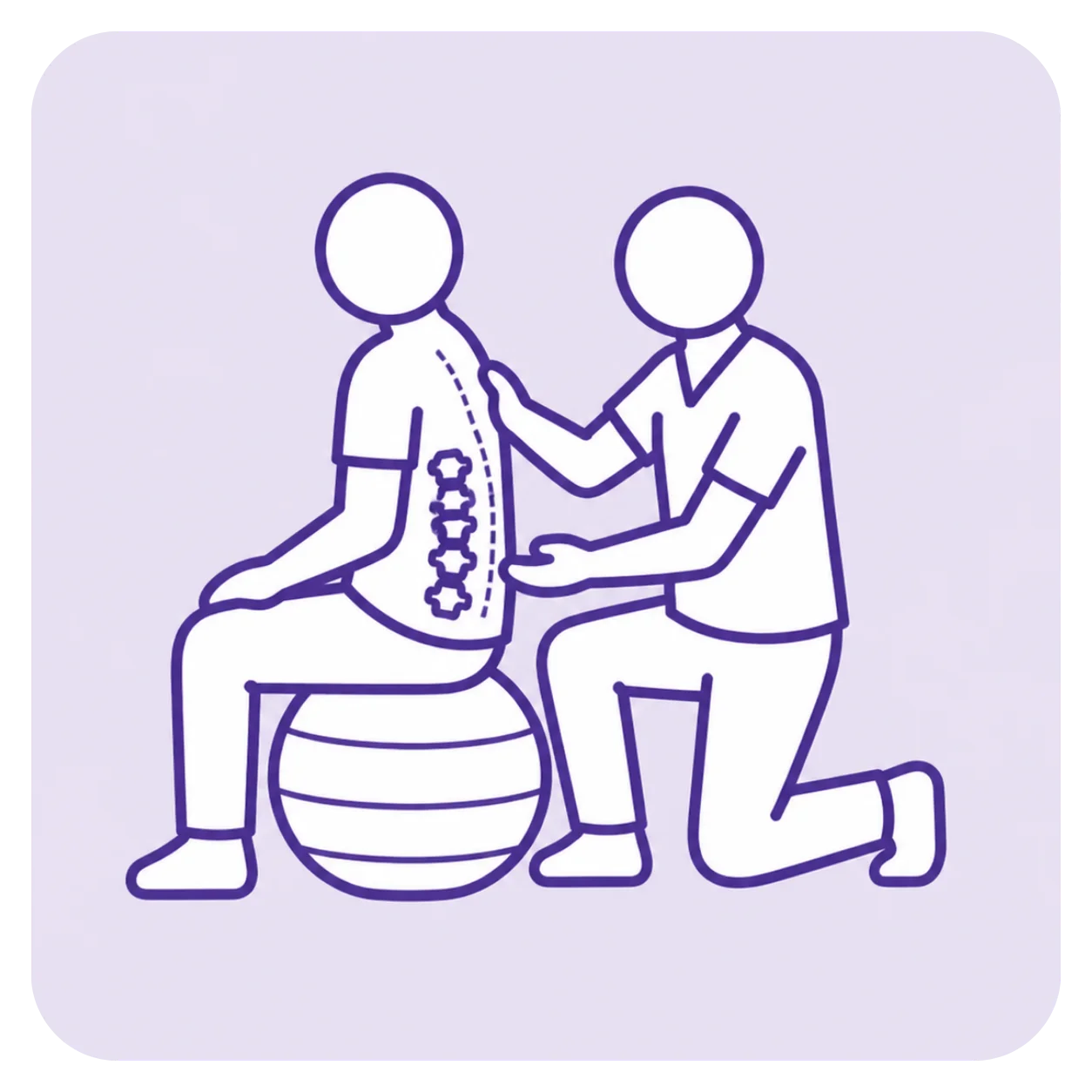
Post-Orthopaedic Surgery Rehabilitation
Rehabilitation after shoulder reconstruction, rotator cuff repair, ankle fixation and fracture management. Customised protocols based on your specific surgery and recovery goals.
Spinal Surgery Rehabilitation
Post-spinal fusion, disc surgery and spinal decompression rehabilitation. Core stability, posture correction and progressive mobility to safely restore spinal function.
General Post-Operative Physiotherapy
Any orthopaedic or MSK surgery not listed above - consult with us. Our comprehensive assessment ensures your rehabilitation aligns with your specific procedure and surgeon's guidelines.
Why Patients Trust OptraCare for Post-Surgical Recovery ?
Protocol Trusted by surgeons
Our Rehabilitation protocols are evidence based, aligned with your surgeon’s guidance for safe, structured recovery.
Dedicated MSK Clinic, Not a General Physio Practice
Orthopaedic rehabilitation is what we do - every day, with every patient. It's not a sideline service. Every physiotherapist here is MSKqualified and experienced in post-surgical care.
Clear Milestones, No Vague Timelines
You'll always know where you are in recovery and what comes next. Phase one, two, three - each with specific functional goals. No guesswork about when you can climb stairs, return to driving, or get back to work.
Family & Carer Involvement
We brief carers on home exercises, what to watch for and how to support recovery between sessions.
Transparent Progress Reporting
Clear updates at every stage. If recovery stalls, we identify why and adapt - and liaise with your surgeon if needed.
Same-Week Appointments Post-Discharge
Starting rehabilitation promptly after discharge is critical. We make this possible - no waiting lists.
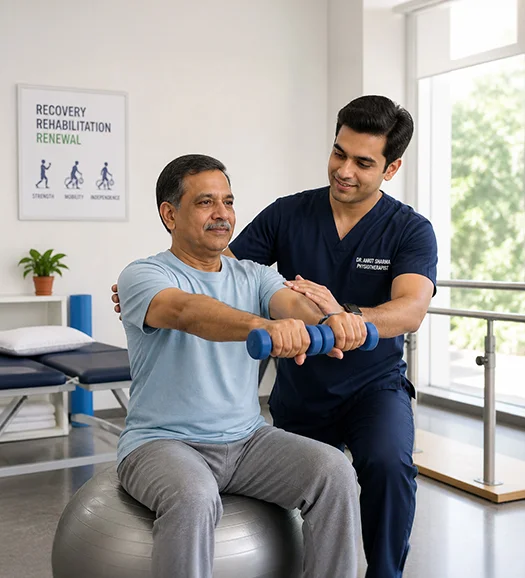
How We Approach Post-Surgical Physiotherapy at OptraCare
Phase 01

From discharge onwards - protecting the surgical site while carefully beginning movement to prevent complications.
- Pain & swelling management
- Early safe mobilisation
- Carer education & home guidance
- Walking aid assessment
Phase 02

Weeks 3–12 - systematically rebuilding strength, mobility and function lost during surgery and recovery.
- Progressive strengthening
- Gait retraining
- Balance & proprioception
- Functional task training
Phase 03
Months 3+ - returning to work, sport or daily independence with a home programme for long-term maintenance.
- Return-to-activity milestones
- Work & sport-specific rehab
- Home exercise programme
- Long-term maintenance plan
Select your surgery type to see the full phase-by-phase recovery timeline. These are evidence-based guidelines – individual timelines vary.
| PHASE | TIMELINE | CLINICAL GOALS | KEY MILESTONES |
|---|---|---|---|
| Phase 1 | Days 1–14 | Swelling control, pain management, gentle quad activation, safe ambulation | Walk 10m, bend knee to 90° |
| Phase 2 | Weeks 3–6 | Full ROM restoration, stair climbing, progressive strengthening | Stairs independently, no aid indoors |
| Phase 3 | Weeks 7–12 | Advanced strengthening, balance training, outdoor walking | Full independence for daily activities |
| Phase 4 | Months 3–6 | Return to social and recreational activities, sustained mobility | Driving, light sport, sustained walking |
| PHASE | TIMELINE | CLINICAL GOALS | KEY MILESTONES |
|---|---|---|---|
| Phase 1 | Weeks 1–2 | Swelling control, restore quad activation and full knee extension | Full extension, minimal swelling |
| Phase 2 | Weeks 3–6 | Progressive strengthening, normalise gait, regain full flexion | Walk without aid, knee bend 130°+ |
| Phase 3 | Weeks 7–12 | Single-leg strength, balance and proprioception, jogging intro | Single-leg squat 80% of opposite |
| Phase 4 | Months 3–5 | Running programme, agility, direction-change, sport-specific training | Full running, pass return-to-run tests |
| Phase 5 | Months 6–9 | Return-to-sport testing, full clearance, injury prevention programme | Full competitive sport return cleared |
| PHASE | TIMELINE | CLINICAL GOALS | KEY MILESTONES |
|---|---|---|---|
| Phase 1 | Days 1–14 | Pain and swelling management, hip precautions education, safe ambulation | Walk with walking aid, safe transfers |
| Phase 2 | Weeks 3–8 | Progressive hip strengthening, gait normalisation, stair training | Walk unaided, stairs independently |
| Phase 3 | Weeks 9–16 | Advanced strengthening, balance, full daily function restoration | Full daily independence, driving readiness |
| Phase 4 | Months 4–6 | Return to recreational activities, sustained strength and endurance | Light sport, sustained outdoor walking |
| PHASE | TIMELINE | CLINICAL GOALS | KEY MILESTONES |
|---|---|---|---|
| Phase 1 | Weeks 1–4 | Pain management, gentle mobilisation within spinal precautions, posture education | Safe sitting, standing, short walks |
| Phase 2 | Weeks 5–10 | Core stability training, progressive mobility, return to daily tasks | 30-minute walks, light daily activities |
| Phase 3 | Weeks 11–20 | Progressive strengthening, return to work assessment, endurance building | Return to sedentary or light work |
| Phase 4 | Months 5–12 | Full strength restoration, return to active lifestyle, long-term spine care | Full activity return per fusion type |
| Phase | Timeline | Clinical Goals | Key Milestones |
|---|---|---|---|
| Phase 1 | Weeks 1–3 | Pain and swelling management, safe early mobilisation, patient and carer education, baseline function assessment | Comfortable rest and transfers, basic self-care independence |
| Phase 2 | Weeks 4–8 | Progressive range of motion, neuromuscular activation, targeted muscle strengthening around affected joint or region | Independent mobility indoors, reduced pain on daily tasks |
| Phase 3 | Weeks 9–16 | Functional strengthening, balance and coordination training, return to sustained daily activity | Stairs, outdoor walking, light household tasks without assistance |
| Phase 4 | Months 4–6 | Advanced strengthening, work and activity-specific rehabilitation, endurance building | Return to work (sedentary or light physical), recreational activity |
| Phase 5 | Months 6–12+ | Long-term function maintenance, neurological re-education where applicable, full independence and prevention programme | Full activity return based on specific condition and surgical outcome |
Book a full assessment - we'll review your case and build a plan from here.
Before your first session at OptraCare, we review your discharge summary, surgery notes and any specific instructions from your surgical team. Where needed, we communicate directly with your surgeon to ensure your physiotherapy aligns precisely with your procedure.
Note: You do not need a physiotherapy referral letter to book at OptraCare. If your surgeon has provided one, please bring it – it helps us align your programme from session one.
Please bring the following to your first appointment:
- Hospital discharge summary
- Surgeon's post-operative instructions or physiotherapy referral letter (if provided)
- MRI, X-ray or surgical procedure reports
- Current medications and any post-surgical movement restrictions
- Your surgeon's contact details for direct coordination if required
Get a full post-surgical assessment from our certified MSK physiotherapist. We’ll review your surgical notes, assess your current function and build a personalised rehabilitation plan from day one.
- Full post-surgical assessment - first visit
- Surgeon-coordinated - we review your discharge summary
- Phase-based plan with clear milestones
- No referral needed - book directly
- Same-day appointments post-discharge
We'll call you within 2 hours to confirm.
Knee Replacement
At OptraCare, the team explained every step before doing it. By week 8, I was climbing stairs without holding the rail. My surgeon was impressed with my recovery speed.
Total knee replacement · 3 months recovery
ACL Surgery
OptraCare’s phase-by-phase programme was the most structured rehab I could have asked for. I passed return-to-sport tests at 8 months and was back playing football by month 9.
ACL reconstruction · return to football
Hip Replacement
The physio explained what was happening, why each exercise mattered and what to expect week by week. After 3 months I was walking independently and back to my evening walks.
Total hip replacement · full independence
Spinal Surgery
OptraCare coordinated directly with my surgeon before my first session. The rehabilitation was incredibly careful and progressive. I returned to desk work at 12 weeks. I felt in safe hands throughout.
L4-L5 spinal fusion · return to work
Knee Replacement
At OptraCare, the team explained every step before doing it. By week 8, I was climbing stairs without holding the rail. My surgeon was impressed with my recovery speed.
Total knee replacement · 3 months recovery
ACL Surgery
OptraCare’s phase-by-phase programme was the most structured rehab I could have asked for. I passed return-to-sport tests at 8 months and was back playing football by month 9.
ACL reconstruction · return to football
Hip Replacement
The physio explained what was happening, why each exercise mattered and what to expect week by week. After 3 months I was walking independently and back to my evening walks.
Total hip replacement · full independence
Spinal Surgery
OptraCare coordinated directly with my surgeon before my first session. The rehabilitation was incredibly careful and progressive. I returned to desk work at 12 weeks. I felt in safe hands throughout.
L4-L5 spinal fusion · return to work
Surgeon-coordinated, evidence-based post-surgical rehabilitation.
Right for You?
Book your rehabilitation appointment if any of the following apply:

Just discharged. May be in pain. Managing with walking aids. OptraCare provides structured, safe, surgeon-aligned physiotherapy from day one of your outpatient recovery.
Researching on behalf of a parent or spouse who has had surgery. OptraCare briefs carers directly and welcomes families to be part of the recovery process.
Surgery is coming. Arrange prehab now to build strength before your procedure and schedule rehabilitation in advance - faster recovery starts before the operation.
Research consistently shows that patients who undergo physiotherapy before elective surgery recover faster and more completely post-operatively. The stronger you go in, the faster you come out.
Baseline Assessment
We measure your current strength, range of motion, balance and functional capacity before surgery. This gives us an objective benchmark to track recovery against post-operatively - and identifies specific weaknesses to target in the weeks before your procedure.
Targeted Pre-Surgical Strengthening
Building strength in the muscles that will be most stressed by surgery significantly reduces post-operative recovery time. For knee replacement patients this means quad and hamstring loading; for hip surgery, hip abductor and glute strength; for spinal surgery, core and spinal stabiliser activation. We programme this specifically to your surgery type.
Joint Mobility Optimisation
Improving the range of motion of the affected joint before surgery reduces the severity of post-surgical stiffness in the early weeks. Patients who enter surgery with better mobility consistently achieve functional range faster post-operatively.
Breathing and Circulation Preparation
Particularly relevant for patients undergoing major orthopaedic surgery under general anaesthesia. We teach breathing exercises, ankle pumping and circulation techniques that reduce the risk of post-operative complications such as DVT and chest infection - starting these before surgery means they are already habit by the time you need them.
Mental and Physical Readiness
Surgery and recovery are demanding. Prehab sessions give you a clear picture of what to expect at each stage - what the exercises will feel like, what normal discomfort looks like versus a warning sign, and what your milestones will be. Patients who understand the process recover with significantly less anxiety and more consistency.
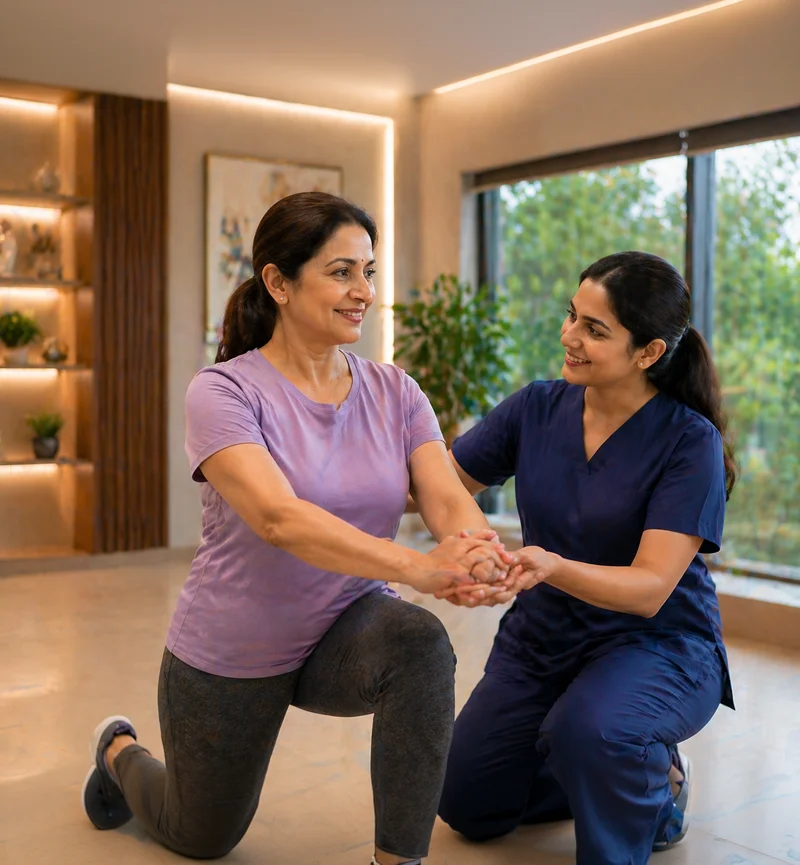
Know Your Physiotherapist
🏥 Co-Founder · Chief Physical Therapist & Ergonomist
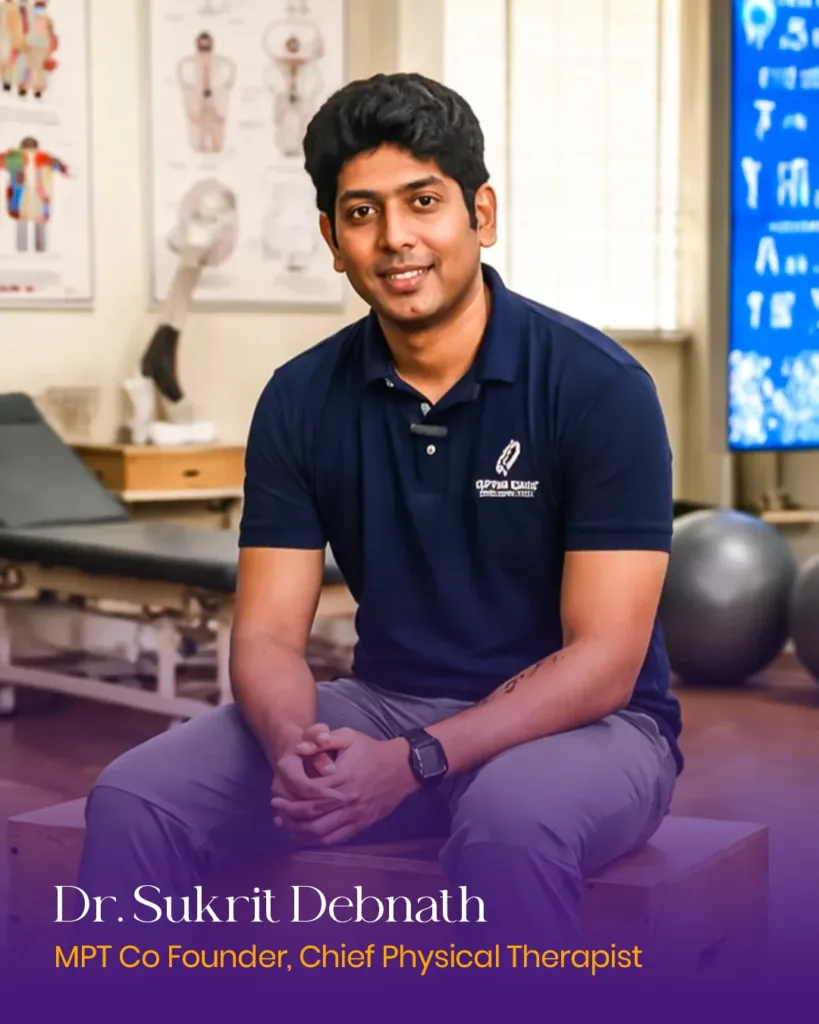
Dr. Sukrit Debnath (MPT)
🏥 Co-Founder · Chief Physical Therapist & Ergonomist
Dr. Sukrit Debnath is a Sports and MSK Physiotherapist specialising in post-surgical rehabilitation – covering knee replacement, ACL reconstruction, hip surgery and spinal surgery recovery. From elderly patients managing their first days post-discharge to athletes returning to competitive sport after ACL surgery, Dr. Sukrit and his team provide phase-based, surgeon-coordinated rehabilitation that prioritises safety and measurable progress at every stage.
Every post-surgical programme begins with a review of the patient’s discharge summary and surgical notes. Treatment is structured around clear milestones rather than time alone – ensuring patients progress when they are clinically ready, not just when a calendar date arrives.
“Post-surgical rehabilitation is not just about exercises. It is about understanding exactly what was done in theatre, respecting the healing tissue, and building function back in the right order. We work with your surgeon, not independently of them.”
Sports & Musculoskeletal Specialisation
Ortho-Sports Clinic, Bangalore
Works alongside surgical teams across Bangalore
Knee, hip, ACL, spinal & orthopaedic rehab
Everything you need to know about post-surgical physiotherapy and rehabilitation.
Everything you need to know about back pain, sciatica and disc physiotherapy in Bangalore.
When should I start physiotherapy after knee replacement surgery?
In most cases, physiotherapy begins within 24–48 hours of surgery while still in hospital. Once discharged, book outpatient physiotherapy within the first week at home. OptraCare offers same-week appointments post-discharge. Do not wait until pain has completely subsided – early intervention prevents post-surgical stiffness and speeds recovery.
How long does physiotherapy take after knee replacement?
Most patients require 3–6 months of structured physiotherapy after total knee replacement. The most intensive phase is the first 12 weeks. By 3 months, most patients achieve full daily independence. Full functional recovery – including recreational activities – typically occurs by 4–6 months.
Is physiotherapy after surgery painful?
Some discomfort is expected, particularly in the early stages. This is normal – it is the body responding to controlled loading. Your OptraCare physiotherapist works within your tolerance and progresses treatment at a pace that is both effective and comfortable. Most patients report reduced pain within the first 2–3 sessions.
Do I need my surgeon's referral to start physiotherapy at OptraCare?
No. You can book directly without a referral. However, if your surgeon has provided a physiotherapy referral letter or post-operative protocol, please bring it to your first session – it allows us to align your programme precisely with what your surgeon has recommended from day one.
How soon can I start physiotherapy after ACL surgery?
Most ACL rehabilitation protocols begin within 2–5 days of surgery. Early physiotherapy reduces swelling, activates the quadriceps and restores full knee extension. Starting too late can allow post-surgical stiffness and muscle atrophy to develop, significantly extending overall recovery time.
What happens if my recovery is slower than expected?
Post-surgical recovery does not always follow a textbook timeline. If your progress is slower, our physiotherapists reassess your programme and adapt accordingly. If a clinical concern warrants your surgeon’s attention, we communicate this promptly. You are never left to manage a stalling recovery alone.
Should I do physiotherapy before my surgery (prehab)?
Yes – if your surgery is planned and elective. Evidence consistently shows that prehab improves post-surgical recovery speed, reduces hospital stay duration and produces better long-term function. A 4–8 week prehab programme before surgery is one of the most valuable investments you can make in your surgical outcome.
Whether you have just been discharged or are planning rehabilitation in advance, OptraCare’s certified MSK physiotherapists are here to guide your full recovery. Surgeon-coordinated. Evidence-based. Personalised.
Same-day appointments. No referral needed.
Your first session includes a full assessment and the start of your treatment.
MSK & Spine Physiotherapy Clinic
No. 14, 80 Feet Road , Koramangala 4 Block, Bangalore, Karnataka – 560 034
Mon – Sat: 8:00 AM – 8:00 PM Sunday: By appointment
Parking available , Lift available , Wheelchair available
✓ Ground floor clinic — fully accessible for post-surgical patients arriving with walking frames, crutches or other walking aids.
No. 14, 80 Feet Road ,
Koramangala 4 Block, Bangalore, Karnataka – 560 034
Phone: +91 82172 79303 | WhatsApp: +91 82172 79303
optracare.com | info@optracare.com